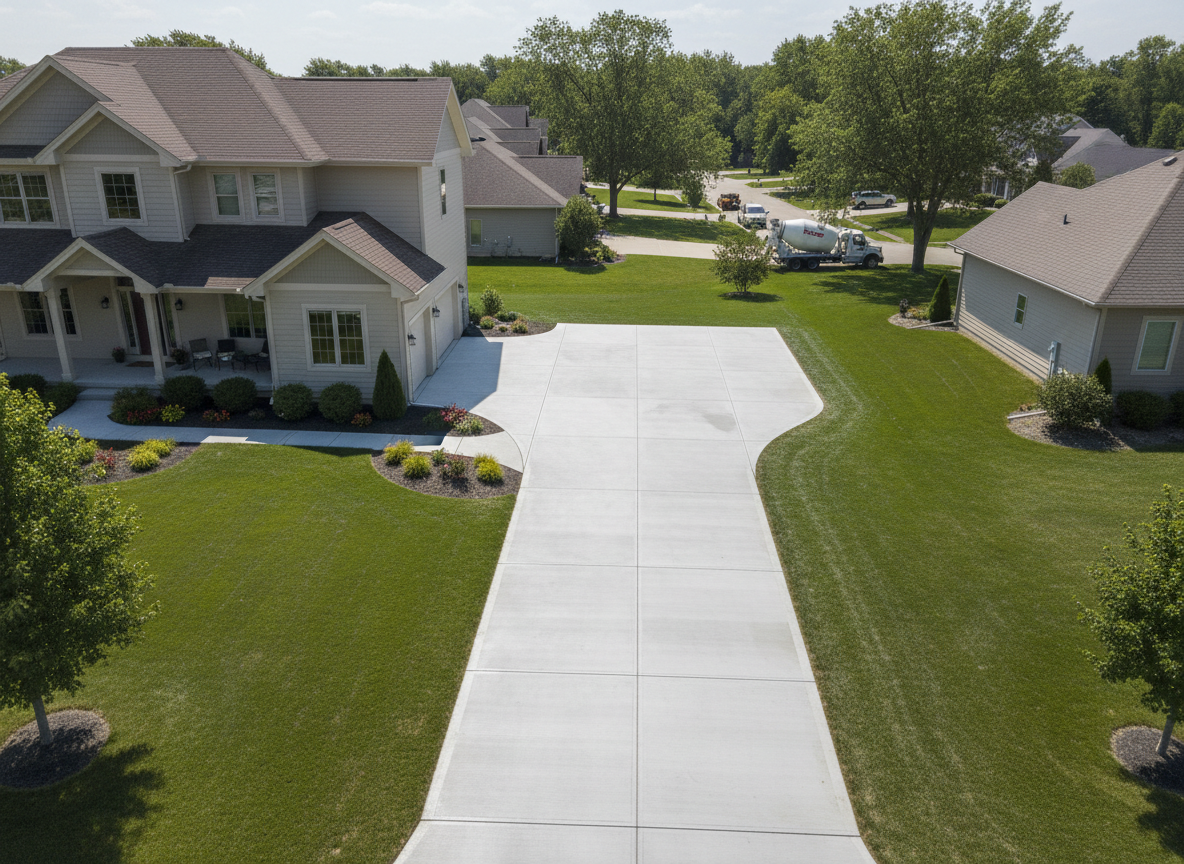
Who This Is For
- Homeowners needing a new driveway, patio, sidewalk, or garage floor
- Businesses needing equipment pads, parking areas, or commercial slabs
- Property owners in SW Iowa or Omaha metro wanting reliable flatwork
- Anyone who's been burned by contractors who cut corners on concrete
Who This Is NOT For
- Projects outside our service area (SW Iowa + Omaha metro)
- Clients who need work started tomorrow with no planning
- Ultra-low-budget projects that require cutting corners on materials or prep
What's Involved
Site prep is the most overlooked step in concrete work. A poor subbase is why concrete cracks. We grade and compact the subbase properly before anything else happens — because what's underneath the slab matters as much as the slab itself.
Form setting determines the final shape, thickness, and elevation of your concrete. We set forms level and secure, with proper control joints planned before the pour — not as an afterthought.
Rebar or wire mesh: most residential flatwork uses wire mesh for crack control. Heavier loads — driveways, equipment pads, agricultural slabs — get rebar reinforcement. We tell you which you need and why, so there are no surprises.
Timing the pour matters. Too hot, too cold, or too wet all affect cure quality. Iowa's weather swings mean we monitor conditions closely and schedule accordingly. Winter pours require heated forms and blankets — we do it, but we're upfront about the added cost.
Finishing: broom finish for traction on driveways and walkways, smooth finish for interior or covered slabs, or exposed aggregate for a decorative look. We discuss your options before we pour.
Curing: concrete reaches full strength over 28 days. We explain exactly what to avoid during the curing period so your investment lasts.
Iowa-Specific Expertise
Frost Line Depth
In SW Iowa, the frost line is approximately 42 inches. Footings and foundations must extend below this depth. Shallow footings heave and crack.
Soil Conditions
Mills and Pottawattamie County soils are often clay-heavy. Proper compaction is essential to prevent settling and cracking under your slab.
Seasonal Timing
Best pours happen April through October. Winter pours are possible with heated forms and insulated blankets — we're transparent about the added cost and precautions.
What's Included
Cost Expectations
Basic flatwork: ~$6–$12 per square foot depending on thickness, rebar, and finish type.
Most residential driveways fall in the $8–$10/sq ft range.
What drives cost up: decorative finish, poor site access, rebar requirements, winter pour.
What drives cost down: simple rectangular shape, easy site access, broom finish.
Full pricing details →Timeline
Estimate: within 1–2 business days of your call.
Scheduling: depends on current workload — we'll give you an honest timeline.
Pour day: most residential flatwork is a single-day pour.
Curing: minimum 3–5 days for foot traffic, 7–10 days before driving on it.